公益社団法人日本空手協会
Japan Karate Association
JKA Karate
Kihon, Kata, Kumite: training the body, shaping character for life.
空手の歴史 · Where Karate Comes From
From Okinawa to Thailand
Karate began in Okinawa, once the Ryukyu Kingdom, where local fighting methods were combined with martial arts brought from China. For generations it was passed quietly from teacher to student.
In 1922, the Okinawan master Funakoshi Gichin, a student of Azato Anko and Itosu Anko, introduced karate at a physical education exhibition organised by the Ministry of Education in Tokyo. He stayed in Tokyo to teach, and karate soon spread through universities and dojos across mainland Japan.
As karate grew, several styles (ryu-ha, 流派) developed. Four are widely known in Japan as the major styles: Shotokan, Goju-ryu, Shito-ryu and Wado-ryu, which are often referred to as traditional karate styles. They share the same roots, and each has its own kata and training methods. Today, more than 100 million people around the world practise or follow karate, according to the World Karate Federation.
Four major traditional karate styles in Japan
Shotokan-ryu
松濤館流
Goju-ryu
剛柔流
Shito-ryu
糸東流
Wado-ryu
和道流
Shotokan grew from Funakoshi Gichin’s teaching. The name comes from his pen name, Shoto (松濤), meaning “pine waves”, and from the dojo he opened in Tokyo in 1939, the Shotokan (松濤館), “the hall of Shoto”. In 1948 his followers founded the Japan Karate Association (JKA), which today teaches Shotokan karate around the world. JKA karate was brought to Thailand by Omura Fujikiyo Shihan, and is taught through TKSA affiliated dojos today.
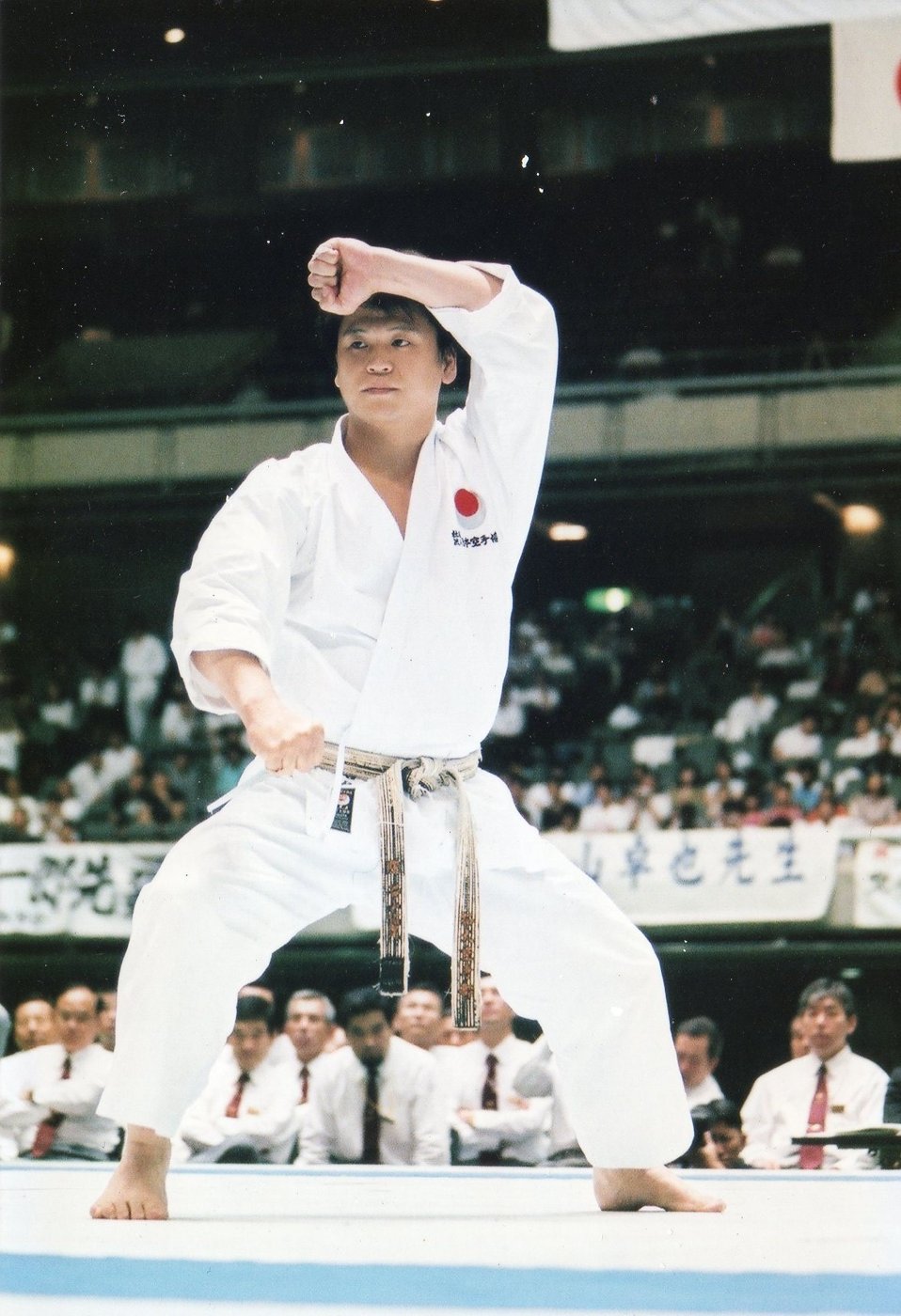
In traditional karate, as practised in the JKA, students train in kihon, kata and kumite. In kumite, techniques are delivered with full intent but stopped just before contact (sundome, 寸止め). Full contact karate was developed from the 1960s by Kyokushin karate, founded by Oyama Masutatsu. Oyama first trained in Shotokan karate as a student of Funakoshi Gichin, the founder of Shotokan. In full contact karate, techniques land with full force, a bout can be won by a knockdown, and punches to the head are not allowed.
Traditional Karate (e.g. JKA)
Kihon, kata and kumite. In kumite, techniques are stopped just before contact (sundome, 寸止め).
Full Contact Karate (e.g. Kyokushin)
Developed by Kyokushin karate from the 1960s. Techniques land with full force; no punches to the head.
About the JKA
The Japan Karate Association (JKA) was founded in 1948, with Funakoshi Gichin, the founder of Karate-Do, as its Supreme Master. It was Master Funakoshi who, in 1929, renamed Karate-jutsu, the “art” of karate, to Karate-do, the “way” of karate. Master Nakayama Masatoshi served as the first JKA Chief Instructor.
The JKA trains its own specialized instructors through its own curriculum, and these instructors have carried JKA Karate around the world. Today about 130 countries are members of the JKA.
Recognized around the world as the standard-bearer of authentic Japanese karate, the JKA upholds the principles of discipline, respect and technical excellence. With millions of members worldwide, it is one of the most widely recognized karate organizations in the world.
The JKA has stayed true to the original teachings of Shotokan karate, without dilution or commercialization. Its mission is to preserve karate as a martial art of self-improvement, discipline and respect, rather than solely as a sport. Practitioners around the world value this commitment to authenticity and the JKA’s role in nurturing karate as a lifelong path of physical, mental and spiritual growth.
In Thailand, JKA Karate is taught through the Thai Karate Shotokan Association (TKSA) and its affiliated dojos.
The JKA at a glance
1948
Founded in Japan
130
Member countries around the world
Millions
Practitioners worldwide
Sources: Japan Karate Association (jka.or.jp); JKA Karate of Arizona (karateaz.com)
空手道 · The “Way” of Karate
Karate-Do
The Karate-Do [the “Way” of Karate] pursued by the Japan Karate Association is not simply about winning competitions or building a stronger body. The ultimate purpose of training is to expand one’s own potential through self-directed learning and disciplined practice, and to strive toward the perfection of character.
Through the repeated practice of fundamental techniques – strikes, kicks, and blocks – in Kihon [basics] training; through Kata, which combines various movements in all directions; and through Kumite, where practitioners face each other and exchange offensive and defensive techniques – the accumulation of this dedicated training develops an efficient and rational use of the body.
Equally important is the cultivation of courtesy and proper conduct, expressed in the principle “[Karate] begins with courtesy and ends with courtesy,” as well as the observance of dojo customs such as bowing to the dojo upon entering and leaving. In this way, the JKA actively carries forward the traditions and culture of Japanese martial arts.
Practitioners of all generations and genders, with different levels of experience and ability, train together in a spirit of mutual support. The dojo of the Japan Karate Association is a place where trust and respect for one another are deepened.
From the website of the Japan Karate Association Headquarters, Tokyo, Japan.
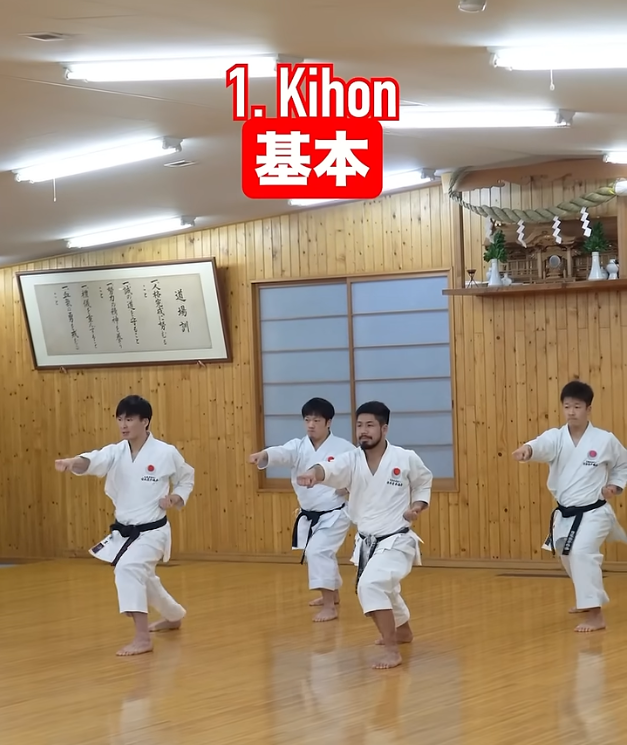
▶ Watch video clip · ดูคลิปวิดีโอ
Kihon, Kata and Kumite – the inseparable trinity of JKA Karate
คิฮน คะตะ และคุมิเตะ – สามเสาหลักที่แยกจากกันไม่ได้ของคาราเต้ JKA
道場訓 · Training Hall Principles
Dojo Kun
The Dojo Kun (道場訓), Training Hall Principles, or Moral Codes of Conduct for Karate Practitioners, is recited in JKA dojos around the world.
It was compiled by the first JKA Chief Instructor, Nakayama Masatoshi Shihan, drawing on the teachings of Shotokan Karate founder, Funakoshi Gichin Shihan.
The Five Principles
Seek Perfection of Character
人格完成に努むること
Hitotsu, Jinkaku kansei ni tsutomuru kotoSee full explanationsClose explanations
This is the highest objective of Karate-Do. Karate is a lifelong path of self-improvement and personal development, extending far beyond self-defense or physical exercise.
To seek perfection of character means striving to become a person who:
- Is sincere and genuine in both words and deeds
- Respects others
- Remains calm under pressure
- Exercises self-discipline
- Continues to grow throughout life
The ultimate purpose of Karate is to develop strong character, beyond strong technique alone.
Word breakdown
Jinkaku
人格
Character / Personality / Human character
Kansei
完成
Completion / Perfection / Accomplishment
Tsutomuru
努むる
To strive / To endeavor / To make effort
Koto
こと
Nominalizer – turns the preceding phrase into a guiding principle or matter to be upheld
Be Faithful and Sincere
誠の道を守ること
Hitotsu, Makoto no michi wo mamoru kotoSee full explanationsClose explanations
Sincerity means being honest, trustworthy, and genuine in both words and actions. This principle encourages practitioners to:
- Tell the truth
- Keep their promises
- Act with integrity
- Be consistent between what they say and what they do
A karateka (i.e. a Karate practitioner) should demonstrate sincerity not only in the dojo, but also at home, at school, at work, and in everyday life.
Word breakdown
Makoto
誠
Sincerity / Truth / Genuineness
Michi
道
Way / Path / Road
Mamoru
守る
To protect / To keep / To observe
Koto
こと
Nominalizer – turns the preceding phrase into a guiding principle or matter to be upheld
Cultivate the Spirit of Perseverance
努力の精神を養うこと
Hitotsu, Doryoku no seishin wo yashinau kotoSee full explanationsClose explanations
Progress in Karate comes through consistent effort rather than natural talent alone. This principle teaches the importance of:
- Dedication
- Patience
- Determination
- Persistence in the face of difficulties
Through regular training and continuous practice, students develop both technical skill and mental strength.
Word breakdown
Doryoku
努力
Effort / Endeavor / Exertion
Seishin
精神
Spirit / Mind / Willpower
Yashinau
養う
To cultivate / To nurture / To foster
Koto
こと
Nominalizer – turns the preceding phrase into a guiding principle or matter to be upheld
Respect Others and Observe Proper Etiquette
礼儀を重んずること
Hitotsu, Reigi wo omonzuru kotoSee full explanationsClose explanations
“Karate begins with courtesy and ends with courtesy.” Funakoshi Gichin Shihan (松濤二十訓)
Etiquette is an expression of respect for others and a way to cultivate humility and self-control, beyond formal ritual. Examples include:
- Bowing properly
- Showing respect to instructors and fellow students
- Maintaining correct dojo manners, including bowing to the dojo when entering and exiting
- Demonstrating gratitude and consideration toward others
In traditional martial arts, true strength is expected to be accompanied by humility and respect.
In competition, victory is not an occasion for celebration at the opponent’s expense. In keeping with the spirit of Respecting Others and Observing Proper Etiquette, winners are expected to refrain from outward displays of excitement – such as victory gestures or shouting “Yes!” – in front of a defeated opponent, out of respect for the defeated person. This standard of etiquette extends beyond Karate to other Budo disciplines, including Judo, Kendo, Aikido, and Sumo.
Word breakdown
Reigi
礼儀
Etiquette / Courtesy / Manners
Omonzuru
重んずる
To respect / To value / To hold in high regard
Koto
こと
Nominalizer – turns the preceding phrase into a guiding principle or matter to be upheld
Refrain from Violent or Uncontrolled Behavior
血気の勇を戒むること
Hitotsu, Kekki no yū wo imashimuru kotoSee full explanationsClose explanations
It warns against acting impulsively out of anger, aggression, pride, or a desire to dominate others. It encourages practitioners to:
- Control their emotions
- Avoid unnecessary conflict
- Remain calm and composed
- Use strength responsibly
“There is no first attack in Karate.” Funakoshi Gichin Shihan
True strength lies not in overpowering others, but in mastering oneself.
This is why every Kata in Shotokan Karate begins with a defensive technique – a block. It is a physical expression of this very principle: that true strength is never the first to strike.
Word breakdown
Kekki
血気
Hot blood / Impetuosity / Rash courage
Yū
勇
Courage / Bravery
Imashimuru
戒むる
To refrain from / To warn against / To admonish
Koto
こと
Nominalizer – turns the preceding phrase into a guiding principle or matter to be upheld
一、 (Hitotsu): in Japanese, Hitotsu means “one” in number counting. However, in the Dojo Kun it is used as a traditional prefix meaning “first and foremost” or “above all.” Each principle begins with 一、 (Hitotsu) to emphasize that all five precepts are of equal and primary importance – none ranks above another. This reflects the holistic nature of Karate training, where character, sincerity, perseverance, respect, and self-control are all essential and inseparable.
The first principle, Seek perfection of character, is the ultimate goal, while the remaining four provide the means to achieve it.
生涯武道 · A Lifelong Path
Karate-Do: A Way of Life
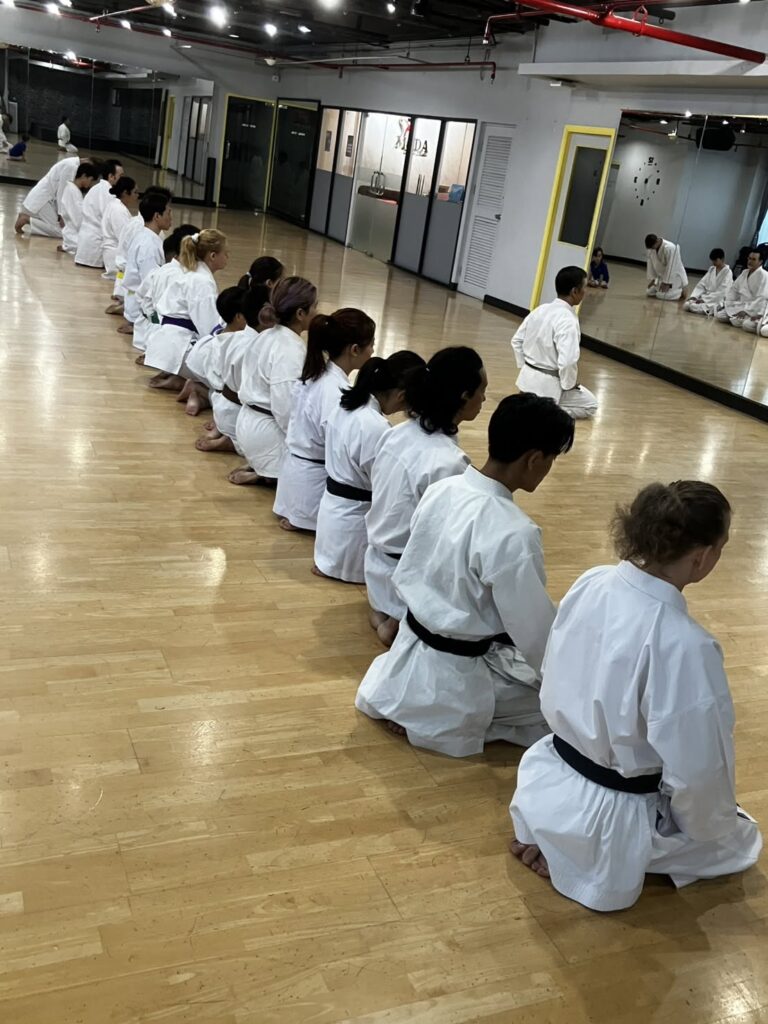
True Karate-Do extends far beyond mastering techniques alone. Observing dojo etiquette, such as bowing at the entrance and exit and showing respect to Sensei and fellow practitioners, is an essential expression of the Karate spirit. Karate-Do is a lifelong commitment to becoming a better human being, in every thought, word, and action, both inside and outside the dojo.
You may notice that none of the Dojo Kun mention technique or defeating an opponent. This is because in Karate-Do (the “Way” of Karate), our ultimate opponent is ourselves. Every kick, punch, and block is a tool for mastering our own mind and body, requiring focus, discipline, and perseverance.
This principle is at the heart of traditional Karate-Do, which was brought by Omura Shihan in 1989 and is currently taught by his long-time students at the Thai Karate Shotokan Association (TKSA)/JKA Thailand affiliated dojos. It is rooted in Budo, a lifelong path of self-cultivation, discipline, and moral conduct.
This is what distinguishes Karate-Do from sport karate, which focuses on earning match points and defeating an opponent. Sport karate plays an important role in attracting and motivating people to begin training, though as an athletic competition, it is something most people eventually step away from as they age.
Karate-Do, by comparison, is a way of living that continues to shape who you are. Both traditional and sport karate hold real value; they simply serve different purposes.
形の三要諦 · The Three Essentials of Kata
Kata no San-yōtei
A fundamental concept in JKA Shotokan Karate that provides the framework for deeper understanding. Mastering these three principles transforms Kata from a memorised sequence into a living, breathing expression of martial art.
力の強弱
Chikara no kyōjaku
Variation of Power
Every technique in Kata must not be performed with equal force throughout. Some movements require explosive, full power, while others are deliberately light or controlled. This contrast – strong and weak – gives each technique its meaning and effectiveness. A Kata performed at constant intensity loses its martial purpose and becomes mere exercise.
体の伸縮
Tai no shinshuku
Expansion and Contraction of the Body
The body must expand and contract naturally throughout Kata. Expansion opens the body to generate reach and power; contraction draws it in to protect, load energy, and prepare the next movement. This rhythmic breathing of the body – in and out – is what gives Kata its flow and its power.
技の緩急
Waza no kankyū
Variation of Speed of the Techniques
Not all techniques are performed at the same speed. Some are executed with sudden explosive speed; others are slow and controlled. This variation of tempo is not stylistic – it reflects the reality of combat, where timing and rhythm are as important as strength and technique.
残心 · Remaining mind
Zanshin
Zanshin (残心) – Literally “remaining mind.” Zanshin refers to the state of sustained awareness and readiness that must be maintained even after a technique is completed. It is not the end of the action – it is the continuation of alertness and focus.
Zanshin is practised throughout Japan, not only in Karate and other martial arts but also in everyday life. It reflects a mindset of remaining alert, attentive, and considerate even after completing an action.
A familiar example is how hosts see off their guests. Rather than simply saying goodbye at the door, they often accompany their guests outside and continue waving until they are completely out of sight. This gesture demonstrates that their care and attention do not end with the farewell but continue until the guests have safely departed. This enduring awareness and consideration embody the spirit of zanshin.
Zanshin in training
Kata
Zanshin is expressed (1) towards/at the end of slow movements, and (2) in the final pose: the practitioner does not relax until the Kata is formally concluded.
Kihon
Zanshin is the discipline of holding focus after the command “Yame/Naore” and slowly returning to Shizen tai, rather than relaxing and rushing to Shizen tai immediately.
Kumite
It is the readiness to defend or follow up immediately after scoring, keeping Kamae (ready posture) rather than turning your back or lowering the guard.